- Published on
Unemployed For Life?
- Authors

- Name
- Johanness Nilsson
- Mastodon
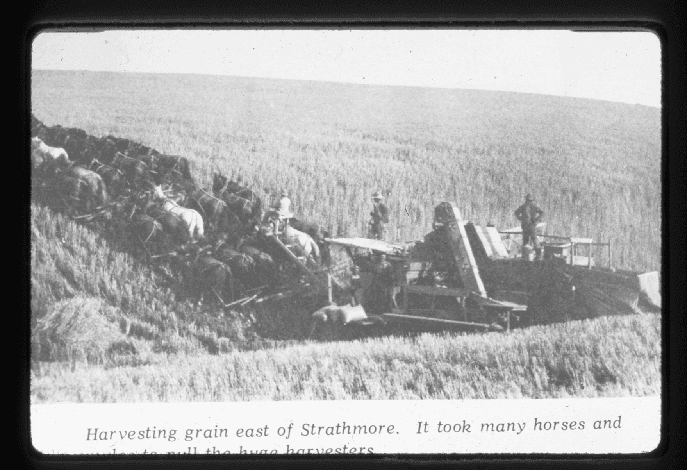
For most of human history, the relationship between work and survival was immediate and legible. You worked the land, and the land fed you. You hunted, gathered, built shelter with your hands, and the connection between effort and outcome was as direct as sunlight. Then agriculture scaled, and work became obligation – tithes, taxes, labor owed to whoever claimed the soil beneath your feet. The industrial revolution moved the transaction indoors. You sold hours to a factory and received wages. The work got more abstract, but the deal stayed simple: your time in exchange for survival.
 It is not gravity. It is a technology. And like all technologies, it can be replaced.
Asleep at the Wheel
I didn’t arrive at these realizations all at once. They accumulated over years, sharpened by a pattern I kept recognizing across every organization I worked inside: the ratio of work that actually moved something forward to work that justified the existence of the work. Any engineer who has spent time inside large institutions recognizes it. You trace the signal through the system and find nodes that are generating heat rather than output — cycles of reporting, reviewing, and re-reviewing that produce the appearance of rigor without changing any outcome. Org charts that look like control diagrams but have no meaningful feedback loops. Meetings that always end by scheduling another meeting.
It was somewhere in the middle of all this that I picked up two books by David Graeber — "Bullshit Jobs: A Theory" and "Debt: The First 5,000 Years"
Graeber is a complicated figure to cite without getting immediately slotted into someone’s political tribe. He was an anarchist, an activist, a provocateur. His politics have a clear address. But the specific observation at the center of Bullshit Jobs doesn’t belong to the left any more than it belongs to the right. Conservatives have been complaining about bureaucratic bloat and unaccountable institutions for decades. Libertarians built an entire movement around the critique of rent-seeking and regulatory capture. Engineers who have traced a decision through fifteen layers of organizational structure to find nobody actually owns the outcome know this feeling intimately. Graeber’s contribution was to name it clearly and sit with the question: if so much modern employment serves no actual function, why does it persist? His answer — that the appearance of work has become structurally necessary to the system, independent of whether the work produces anything — is uncomfortable, not because it is radical, but because it is legible. Most people already know it. They just haven’t had permission to say it out loud.
The COVID pandemic stress-tested this at scale. Many organizations — stripped of their rituals and physical proximity — discovered that a significant portion of their activity had been exactly what it looked like: a system running on inertia, maintaining the appearance of purposeful motion. The honest conversation about what that revealed never quite happened. It was still, at the time, a bit too soon.
I want to be explicit about something here. I’m not writing this from a position of personal panic. My own work sits largely outside that category. I build things that have to exist in the physical world. I fix systems that are actually broken. As an engineer, a coder, a machinist, and a builder, my labor is still anchored to reality in a way that insulates me ‒ at least for now – from the most immediate forms of replacement.
That insulation matters, because it forces honesty. This isn’t fear talking. It’s pattern recognition.
The roles most exposed to automation aren’t the ones that make, repair, or directly interface with the material world. They’re the roles whose primary function is to coordinate, verify, and route information inside institutional hierarchies — not because AI is indifferent to the humans who hold them, but because those roles were already optimized for a world where human attention was the scarce processing resource. That scarcity is ending.
And it’s precisely the people holding those positions ‒ the ones who still believe their badge, title, or middle-management perch guarantees relevance – who most urgently need to update their map. Not tomorrow. Not after the next reorg. Now.
Artificial general intelligence is not just another technological wave. It is a structural rupture, one that threatens to invalidate the central bargain underpinning industrial civilization. The bargain was simple: human labor has value because human intelligence is scarce. That scarcity justified wages, careers, hierarchies, and the quiet belief that if you tried hard enough, there would always be a place for you.
That belief is eroding faster than most people are willing to admit.
What unsettles me is not the capability of the machines themselves, but the collective sleepwalking that surrounds their arrival. We are accelerating down a highway at night, hands resting lightly on the wheel, trusting that the road ahead resembles the one behind us. By the time the scenery changes, it may already be too late to slow down.
I don’t write this as an authority. I’m not an economist, a futurist, or a policy architect. I’m a technician — a person who builds, fixes, and breaks systems for a living. That vantage point matters, because systems also succeed in recognizable ways, and the shape of what’s coming is more legible from the bench than from the podium.
We are approaching a moment where expertise itself becomes cheap, where cognition is no longer a moat, and where the stories we tell ourselves about work, merit, and security stop matching physical reality. When that happens, credentials lose gravity. Careers lose narrative coherence. And entire lives, organized around the premise of stable employment, begin to drift.
This post is not a prediction and it is not a warning issued from on high. It is an attempt to think clearly while the ground is moving – to understand what happens to people, to meaning, and to freedom when jobs cease to be the organizing principle of society.
If we are going to lose work as we know it, we should at least be honest about what replaces it.
The Foundation
If you were to walk into my electronics shop right now, you wouldn't be greeted by minimalism or order in the modern sense. You'd step through the door into a dense, lived-in space where decades of technology coexist in various states of repair and disassembly. Vintage synthesizers and their parts line one wall, shoulder to shoulder, their wooden cheeks and metal panels dulled by decades of hands, smoke, heat, and time. Opposite them are not whole mixing desks, but their remains: channel strips, meter bridges, power-supply frames, ribbon looms coiled like sheep skins. This is not a museum display. It's a corridor – narrow, dimly lit, and dense – lined with the artifacts of past electronic eras, all quietly pointing forward.
As you move deeper into the space, everything subtly funnels your attention toward a single source of light at the back: the workbench. The front of the shop is heavy and still, populated by machines that are dormant, incomplete, or waiting their turn. Dead and silent. The farther you walk, the more intentional the space becomes, until the clutter resolves into purpose.
That bench is where motion resumes. Where my oscilloscope flickers to life, relays click, and circuits that have been inert for years are coaxed back into behavior. This is where electricity starts flowing again with intent. Where boards are debugged, traces repaired, voltages rebalanced. Life doesn't exist in the room all at once – it emerges there, at the bench. Circuits are not displayed here. They are reborn.
I’ve come to realize that I don't quite fit the image of a blue-collar worker, but I'm not the clean abstraction of a knowledge worker either. I live somewhere in between – where thinking and doing collapse into the same motion.
What most people don't realize – what I barely admitted to myself for years – is that this bench isn't new. It didn't appear after some midlife pivot. It was always there, running parallel to the software career like a second circulatory system. For nearly twenty years I wrote code for a living, and during all those years I also repaired electronics, resto-modded vintage cars, installed custom EV drivetrains, and built things for money on the side. The soldering iron never went cold. The shop never closed. I just couldn't call it my real work, because the thing that deposited a predictable number into my bank account every two weeks had claimed that title. The side work was the thing I did because I couldn't stop. The software job was the thing I did because I thought I couldn't afford not to.
Then the first wave of AI shook the software industry hard enough to knock me loose.
I was laid off. And instead of the panic I expected, something stranger happened. For the first time, the parallel work life – the one with the bench and the oscilloscope and the smell of rosin – moved into the foreground. Not as a backup plan. As the plan. I started asking a question I'd never had the breathing room to ask before: what does it actually look like to be unemployed and do my own thing full time?
It looked, as it turned out, like moving to Los Angeles to rebuild a ninety-six channel SSL mixing desk.
That job alone – one massive, intricate, absurdly demanding project – funded relocation and sustained life for most of a year. A year of being technically unemployed and practically more productive than I'd ever been while drawing a salary. I was solving real problems on real hardware, problems that couldn't be abstracted away or delegated to a framework. Every channel strip had its own history of damage, modification, and neglect. Every repair was a conversation with the engineer who'd built it thirty years ago and the dozens of hands that had been inside it since. The work was hard and specific and mine.
It was toward the end of that year and that massive project that I found a job listing so unapologetically non-bullshit I almost didn't believe it was real. A direct air capture startup, practically just next door in the San Fernando Valley, building physical machines that pull CO₂ out of the atmosphere and turn it into synthetic fuel. They needed someone who could think across electrical, mechanical, and software systems. Someone who wasn't afraid of uncharted territories. Someone, frankly, who had spent twenty years toggling between code and copper wire and couldn't be cleanly filed into either category.
I took the job. Not because I needed to go back to being employed. Because the work was real in a way I'd been chasing my entire career without knowing it.
On my LinkedIn profile, I'm an entrepreneur first. Everything else comes second, including my current role at this ambitious startup where I work as a technological hacker and professional generalist – lead technician, if we're being formal about it. Whether that role, or the company itself, will survive the next decade is still an open question. I like to think I know the answer, and the answer is yes – we exist and we are thriving. Our motto is “We will win”! But the truth is, we just don't know. Nobody does. That's the nature of building something that didn't exist before.
But if you think that my electronics shop is just a side hustle, or that my day job represents a stable career path, you may be missing the point. A point that is only now beginning to dawn on the working middle classes.
Employment is an illusion of security.
And the giants of technology are poised to pull back the curtain.
The Great Displacement
We need to talk honestly about what is happening to labor in the age of AI. We are at an inflection point without clear historical precedent — not because the forces of change are new, but because this time the thing being automated is cognition itself.
Machines capable of performing nearly any cognitive task a human can do–faster, cheaper, and without fatigue–are no longer science fiction. The timelines have collapsed. The people building these systems are openly telling us to prepare within years, not generations.
 The assumption of the past is breaking.
We are crossing from the information age into the age of intelligence, where knowledge is abundant and talent itself is automated. This isn’t about better tools; it’s about a fundamental shift from scarcity of expertise to abundance of productivity.
The working-class human is being eroded systemically. The knowledge worker is not exempt. If your primary economic value lies in processing information, writing code, managing workflows, or performing mid-level cognitive labor, you are standing on thin ice–and the temperature is rising.
I don’t observe this from a distance. I work alongside interns and young professionals every day. I collaborate with them directly — on real projects, real builds, and real constraints. We share engineering notes, assembly documentation, and the pressure of deadlines that actually matter. We don’t simulate work; we ship it. I watch them plan their futures in real time — stacking credentials, polishing résumés, optimizing themselves for a system they believe will still be there when they arrive.
And that’s where the honest concern comes from.
They’re smart, motivated, and doing exactly what they were told to do. The instructions are just pointing at a landscape that is shifting beneath them. The world they were prepared for still exists — but its edges are contracting, and the version that will be available to them in five years looks meaningfully different from the version available to their predecessors five years ago.
Sending a young person into the next decade equipped only with a traditional credential and an expectation of stable employment is handing them a map that was accurate ten years ago. The territory has changed. If you’re Gen-Z, or Gen-Alpha, and this is you, I’m not talking about a hypothetical future. I’m talking about the floor you’re standing on right now.
If your primary economic value is the cognitive work you can perform per hour, you are competing against systems with no overhead, no fatigue, and continuous improvement curves. That’s not a race you win by running harder. It’s an argument for changing the terms of participation entirely.
This is why I believe employment, as we understand it, is approaching the end of its historical relevance. Not overnight–but slowly at first, and then suddenly all at once. Wages stagnate. Hiring freezes. The middle of the corporate ladder dissolves.
Which leaves us with a simple, possibly terrifying question: if we cannot work for wages, how will we survive?
Already Underway
If you think this displacement is still theoretical – still safely confined to white-collar knowledge work and Silicon Valley layoffs – you haven't been paying attention to what's already happened in manufacturing and agriculture.
Some industries didn't wait for artificial general intelligence. They've been quietly paring back for years with plain old mechanization, automation, and software control. The AI wave isn't starting from scratch in these sectors. It's finishing what CNC machines, cobots, and digital workflows already started.
Take machine shops. The rapidly growing trend toward lights-out manufacturing – running spindles unattended through nights and weekends – is real and accelerating. Cobots load and unload parts. Automated tool changers swap worn cutters. Machine vision and calibrated sensors flag anomalies. A shop that used to need an operator standing at every machine for every shift can now run stretches of unattended production, especially on standardized, high-volume work. It's not the science fiction version just yet – true zero-human-intervention dark factories are still rare and mostly limited to super high volume and highly standardized production lines. Real shops still need technicians for setup, maintenance, quality checks, and the exceptions that machines can't handle yet. But the direction is unmistakable: every cycle of improvement reduces the number of human hands required, and the economics push relentlessly toward fewer operators per spindle hour.
The CNC business I took over was struggling against exactly this pressure. A small job shop with manual loading, human operators, and eight-hour days cannot compete on price or turnaround with a facility that runs its machines through a second and third unattended shift, even partially automated ones. You don't need a fully autonomous dark factory to gut a competitor's margins. You just need one cobot and a bar feeder running overnight while the other shop's machines sit cold. The gap compounds quickly.
It's worth noting that not everyone in manufacturing is racing toward headcount zero. Companies like SendCutSend have built a fast-growing sheet metal operation that leans heavily on digital workflows and rapid turnaround – but their CEO talks openly about paying well, hiring aggressively, and keeping humans at the center of the operation. That's a real model too, and it works. But it works now, in a window where human judgment and adaptability still have clear economic value on the shop floor. The question is how wide that window stays as the cobots get cheaper, the machine learning gets sharper, and the operations that do automate keep pushing prices down for everyone else.
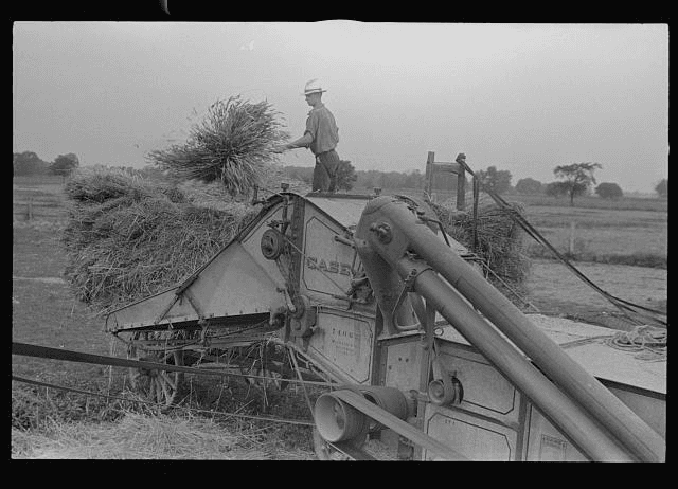
Farming tells the same story at a different scale and with an uglier twist. A task that required twenty men and a team of horses in 1906 now requires one operator in an air-conditioned cab monitoring GPS-guided equipment that steers itself. Agriculture has already eliminated the vast majority of the human labor it once demanded. The farmer isn't gone, but the farmer's role has narrowed to something that increasingly resembles a biological failsafe – a flesh-based watchdog for machines that do the actual work.
And here's where it gets feudal.
Those machines the farmer monitors? The farmer may have paid for them, but the farmer doesn't own them – not in any meaningful sense. John Deere and other manufacturers have embedded proprietary software into every critical system, and that software is locked behind digital gates that only authorized dealerships can open. When a tractor throws an error code during harvest – and harvest waits for no one – the farmer can't diagnose the problem. Can't access the repair manual. Can't flash the firmware. Can't even read the diagnostic data generated by sensors on equipment parked in their own field. They have to call the dealer, wait for an authorized technician, and pay whatever the dealer charges, because the alternative is watching the crop rot.
The FTC sued Deere over this in January 2025, alleging the company illegally restricted repair access to boost its dealership profits. Farmers have been fighting back through right-to-repair legislation for years. Colorado passed a law. Canada amended its copyright rules. The EPA recently clarified that the Clean Air Act can't be used as an excuse to lock farmers out of their own engines. But the structural pattern is already set: you bought the machine, but you rent the right to use it, and the manufacturer can change the terms whenever it suits them.
The structural pattern matters more than the specific case. When critical tools run on proprietary firmware that the buyer cannot inspect or maintain, ownership becomes nominal. You hold the title, but the manufacturer holds the keys. The economic term for this arrangement is dependency — and dependency in critical systems, at scale, is a governance problem. It is not inevitable. It is a design choice. One that right-to-repair legislation, open firmware standards, and regulatory pressure are beginning to contest, unevenly and slowly.
Now extend that pattern forward. As AI and automation deepen, the same dynamic scales into every industry. The software black box that Deere built around its tractors is the template – not for full automation, but for control. Every machine that runs on proprietary firmware, every tool that requires a subscription to function, every piece of equipment with a kill switch controlled by the manufacturer – it all points in the same direction. You don't own the means of production. You subscribe to them. And the subscription can be revoked.
This is the techno-feudal path operating at industrial scale in two of the oldest sectors of human economic activity: making things and growing food. It didn't require AGI. It didn't require a policy debate. It just required companies quietly replacing ownership with access, one software update at a time, while everyone was busy arguing about chatbots.
Two Futures
The path we choose now will determine the shape of human life for centuries.
One path–the one we seem to be drifting toward by default–is one where access replaces ownership.
Thirty years ago, a loose coalition of cryptographers, hackers, and political dissidents discussed in an online email list where they made a wager: build systems that don't require trust, and eventually people will stop tolerating institutions that demand it. They weren't utopians. They were engineers who understood incentive structures better than most economists and cared about power more honestly than most politicians. Their question was simple. What happens when coordination gets cheap, replication gets free, and the entire justification for centralized authority – that someone has to manage the scarcity – disappears?
We are now living inside that question, and most of the public conversation about it ‒ In my humble opinion ‒ is totally worthless.
Start with money, because money is where the confusion is thickest. Money is not a neutral medium of exchange. It never was. It is a technology of control – a shared fiction that lets strangers cooperate across distance, yes, but one whose terms have always been set by whoever holds the largest stakes, ie: power. States and banks have controlled that fiction for centuries, not because they're uniquely virtuous, but because verification used to be expensive. You needed a trusted third party because you couldn't check the ledger yourself.
Cryptography killed that constraint. Distributed ledgers make ownership legible without anyone's permission. Smart contracts enforce conditional promises without courts. Today this already moves trillions of dollars. The technology is not speculative. What it lacks is narrative legitimacy – the story is not widely told – and it’s the story that lends such a mechanism the cultural infrastructure that makes people treat it as real in the way they treat a bank statement or a little piece of plastic they carry around as real.
But here's where the story forks, and where most people lose the plot I think.
When the US Govt. recently announced a strategic hold of Bitcoin, that is not the cypherpunk dream being realized. That is the state incorporating a new asset into the same debt architecture it has been running for centuries. Old ledger, new ink. The obligation doesn't get cancelled or restructured. It gets redenominated and foisted back onto the public in a shinierd wrapper. This is not crypto as liberation. This is crypto as an instrument – absorbed into the palace treasury, wielded by the same hands that created the problem.
The actual cypherpunk project points somewhere else entirely. Not a new currency issued from the top down, but systems that emerge from the ground up – where the rules of obligation are transparent, where the ledger belongs to everyone, and where opting out is a design feature rather than a crime.
The same displacement AI brings to labor, cryptography brings to coordination. And once you see that, the post-scarcity question stops being about productivity entirely. Marginal production costs are collapsing? Okay fine. The bottleneck was never output. The bottleneck is distribution. Who gets access to the machines? Under what conditions? Who decides?
Two answers are currently on the table.
The first: platforms and permissions. A handful of companies own the infrastructure, meter access through subscriptions and API calls, and capture the surplus. You use the tools at their discretion. This is the default trajectory, and it is already well underway.
The second: ownership and exit. Not symbolic ownership – not a governance token you can't do anything with – but cryptographically enforced stakes in the systems that generate value. If AI models are trained on the collective output of human civilization, then the returns from that automation can be routed, by design, back to the people who generated the training data. Not through benevolence. Not through tax policy that takes twenty years to pass and another ten to enforce. Through protocol design. Through math.
Someone usually brings up universal basic income here, and I want to be direct about why that framing is inadequate. A stipend distributed by the same institutions that failed to manage the transition isn't liberation. It's dependency wearing a progressive mask. What my grandfather used to call a "Pair of Golden Handcuffs" which – unironically ‒ he was using in reference to state run social welfare programs. I digress. The cypherpunks project was never about receiving allowances from the state. It was about building systems where participation itself generates yield – where showing up, contributing, maintaining, governing are all compensated automatically because the rules are embedded in the infrastructure, not in some politician or corporations's platform.
Think about what actually shifts when production costs hit zero. Markets stop clearing on labor. The massive apparatus of performative employment – careers built on ritual, compliance, and inertia rather than anything resembling value – doesn't just become unnecessary. It becomes structurally impossible to justify. The question "who did the work?" matters less than "who maintains the system, and under what rules?" That's not a philosophical abstraction. That's a governance engineering problem, and it's solvable – if you embed the governance at the protocol layer instead of trying to bolt it on after the money has already been extracted.
DAOs were an early ‒ and in my opinion – clumsy attempt. Many failed, and some deserved to fail. But the core architecture is sound: organizations with transparent rules, auditable treasuries, and incentive structures defined by code rather than charisma. Dividends instead of wages. Participation instead of employment. No CEO deciding who gets what based on stock options, inter-office politics or quarterly earnings pressure.
Surplus is the keyword. Stay with me on this for a moment, because this is where the speculation gets interesting.
Right now, when we talk about DAOs, we’re still imagining humans voting on proposals, humans staking tokens, humans arguing in chat channels about treasury allocations. The governance is automated but the participants are still us. Slow, emotional, tribal, easily distracted by short-term incentives. That’s why most DAOs historically have resembled dysfunctional co-ops more than the elegant coordination machines that they were supposed to be. Humans are the bottlenecks in human governance. Not exactly a surprise.
But what happens when the agents participating in these structures aren’t human at all?
I’m going to go out on a limb here. We are maybe eighteen months – maybe less – from a world where autonomous programmatic agents can spin up, negotiate contracts, execute services, receive payments, and allocate surplus without a single human being involved at any step. Not speculative science fiction. As deployed infrastructure. The pieces already exist today although mostly in isolation. LLMs that can reason about strategies, crypto wallets that are wholly controlled by these programmatic agents, smart contracts that execute on conditions without human permission. The only thing missing is the connective tissue, and that tissue is being built right now by hackers who understand exactly where this is all heading.
Imagine an autonomous agent that operates a compute cluster.
It purchases electricity on a spot market. It rents out processing power to other agents and monitors its own utilization and pricing in real time, and routes its surplus – the gap between its Opex and Capex – into a treasury governed by predefined rules. Maybe a percentage flows into a pool for the humans who deployed it. Maybe a percentage fund the training of the next generation of models. Maybe a percentage goes into a public goods pool that subsidizes access for agents that can’t yet operate profitably. All of this happens at machine speed, with machine precision, recorded on a transparent ledger that everyone can audit – that is if you know where and what to look for.
Getting interesting, isn’t it? Now multiply that by ten thousand. A hundred thousand. Autonomous agents negotiating with other autonomous agents, forming temporary coalitions to tackle larger tasks, dissolving when the task is done, splitting the proceeds according to the contribution metrics that were agreed upon before the first computations ran. An economy that operates continuously, globally, and at a cadence that no human institution could match. No quarterly reports. No board meetings. No earnings calls. Just protocols, execution and distribution.
This is not my utopian fantasy. It is the logical endpoint of three converging technologies. AI that can reason and act, cryptography that can enforce agreements with zero trust, and networks that can settle value without intermediaries. Each one is very powerful on its own. Together they describe something that does not have a good name yet, because it has never existed before. An economy where the machines don’t just produce the surplus. They organize it.
The question that has been keeping me up at night is not whether this will happen. We’re way past that. Rather, it's who writes the rules that these autonomous economies will operate by. Because those rules, protocol layers, governance logic and the distribution functions will determine whether the surplus flows back to the public or pools in the wallets of whoever deployed the first generation of agents. This is on the same fork I’ve been talking about: platform feudalism versus distributed ownership. The only difference here is the timescale. With human governance, you have years to course-correct. With machine economies, the rules get locked in at deployment, and by the time someone realizes the distribution is wrong, the system is already ten million transactions deep and running at a speed that makes democratic deliberations look like geological timescales.
This is why I think that the protocol layer of the future society matters more than any individual application. This is why the cypherpunks were right to obsess over the nuances of the rules of the game rather than the actual moves. The machines are going to play the game faster than we can follow anyways. The only thing we get to decide – and it is important to remember we only get to decide once now, and not later – is what game they’re playing.
None of this requires abolishing markets. None of it requires pretending incentives don't exist. It requires recognizing that when intelligence becomes infrastructure – as cheap and ubiquitous as water and electricity – access to that infrastructure has to be treated as a public good. We've done this before. Roads, power grids, water systems were all private luxuries before society figured out that universal access multiplied value for everyone. AI and cryptographic ownership are the same category of problem. We just haven't admitted it yet.
In this version of the future, people aren't "unemployed" in the way that word currently means – discarded, anxious, scrambling. They're decoupled from coercive labor. Survival doesn't depend on obedience to an employer. Work doesn't disappear. It transforms. People build because they want to. Reputation still matters. Contribution still matters. What changes is the existential threat underneath. The part where your ability to feed yourself is coupled to a single employer's quarterly earnings. Decouple that, and work transforms. But decoupling it requires answering a question that almost nobody in public life is asking honestly: “How do you increase the rate of capital formation and broaden its distribution without destroying the incentive structures that make the wealth engine run in the first place?” That's not a leftist question or a rightist question. It's an engineering question. And it has engineering answers, if you are willing to treat economics as a design problem rather than a theology.
That distinction keeps getting flattened in public debate: work versus idleness, productivity versus laziness. It's the wrong axis. The real choice is between coerced participation in systems that extract value upward and voluntary participation in systems that distribute value laterally. One produces resentment and brittleness. The other produces resilience. This should not be difficult to communicate, but as I was lamenting to an acquaintance recently, it is. The people with the biggest megaphones have a financial interest in keeping it muddy. And the people who actually understand how to build these systems – the engineers and cryptographers who could set the whole thing in motion tomorrow if you let them – are famously, catastrophically bad at explaining why you should care.
The tools exist. The mathematical foundations have been laid for decades. The models work. What's missing is collective literacy, id est, enough people understanding the structural argument to make it politically viable – and the willingness to say plainly that the story about jobs was always temporary scaffolding. It was never the foundation. The foundation is: people need access to resources, and the mechanism by which that access is mediated determines whether a society is free or feudal.
A post-scarcity future doesn’t arrive by petition. It arrives the way the cypherpunks always said it would: by building parallel systems until the old ones become optional and eventually obsolete. The math hasn’t changed. The tools have only gotten better. What’s changed is that the design decisions are being made right now — and the default, if you don’t engage with it, is a world where access is metered, where the tools that replaced your job are available to you only by subscription, at terms set by whoever owns the infrastructure. That is not a distant risk. It is the current business model of the most powerful companies on earth.
So the question isn't whether the alternative is possible. It's whether enough people engage with it early enough to shape how it gets built.
Beyond Work
Economic displacement is only half the disruption. The deeper challenge is identity. In our culture, “What do you do?” is the first question we ask strangers — and the answer is how we locate ourselves in the world. Remove work from that equation and a lot of people aren’t just navigating financial uncertainty. They’re facing an identity question they’ve never been asked to answer before.
I’ve had that experience — of the self dissolving, of not knowing what’s left when the scaffolding falls away. Some of those times were in a therapist’s office. Some were on heroic LSD trips. Some were just a Tuesday, after being laid off. The specifics matter less than the mechanism: the thing that told me who I was stopped being available, and for a while I didn’t have a replacement. That’s not a character flaw. That’s what happens when a structure you’ve built your identity around goes away faster than you’ve had time to build something else.
The question I keep coming back to — and I suspect I’m not alone — is what this looks like for the people who haven’t built the alternative yet. Not the people like me, who had decades to develop a parallel identity in parallel work. But the people entering adulthood now, and the children who will follow them. The ones for whom the old script — education, credentials, career, stability — is the only script anyone handed them.
Japan gives us a useful preview, with enough lead time to respond differently. After the economic disruption of the late 1980s and early 1990s, a generation of capable, educated young people — prepared for a system that no longer had a place for them — began withdrawing from society entirely. The Japanese call them the hikikomori: people who retreat into their homes, often into a single room, and don’t come out. Not for months. Not for years. Sometimes not for decades. The most recent government survey counted 1.46 million. Leading researchers believe the real number will eventually exceed ten million.
The important thing about the hikikomori is not the scale. It is the mechanism. These aren’t people who failed to try hard enough. They’re people who lost access to the social script that told them who they were, couldn’t find a replacement in time, and turned inward. Japan’s response was slow and inadequate, and the problem compounded into what the Japanese now call the “8050 problem” — elderly parents in their eighties still supporting withdrawn children in their fifties.
We have something Japan didn’t in the 1990s: we can see this coming. We are watching it approach in real time, with data, with precedent, and with technologies capable of building entirely different structures before the old ones fail. That’s not a given — seeing a problem and solving it are different things. But it is an advantage we can choose to use.
The generational question is the real one. Every parent with children in school right now is, consciously or not, asking a version of it: does the trajectory we’re on leave a genuine path for them? Not a safety net. A path. Something that rewards what they’re good at, gives their effort somewhere real to land, and doesn’t require them to fit themselves into institutional structures that may not be there by the time they arrive.
When machines outperform us at the tasks we trained our entire lives to do, the external validation of being necessary evaporates. For many people, work isn’t just income. It’s the scaffolding that holds everything else in place — routine, status, social belonging, the quiet reassurance that you matter because someone is paying you to show up. Pull that scaffolding out and things fall apart fast. Not just financially. Psychologically.
I’ve alluded to this, already. I know this because I lived a version of it.
I spent years in software – years where my value was legible, quantifiable, the kind of work that looks good on a résumé and makes sense at a dinner party. When a lay-off came unexpectedly my way I took it as my cue to walk away. Not because I was forced out, but because the work had hollowed out. I was solving problems that didn't matter for SaaS solutions I didn't really believe in, and the big fat paychecks had become the only reason to keep going at it. It had gotten that way long before that lay-off day came. That's a slow poison, and I think more people are drinking it than will admit.
When I stopped defining myself by my job title and started defining myself by what I actually cared about – building things, understanding systems, making broken things work – the path to rebuild my self identity assembled itself. Not neatly. Not quickly. But solidly.
That's the part of the post-scarcity conversation that almost nobody is having. The economic question – how do people survive when machines do the work – is important, but it's the easier problem. The harder problem is: how do people survive psychologically when the thing that told them who they were goes away?
The answer isn't to cling harder to the old scaffolding. It isn't to invent new performative roles so people can pretend nothing changed. And it isn't to hand everyone a welfare check and call it dignity.
The answer is that most people already know what they care about. They've just never been given permission – or the economic breathing room – to pursue it. The retired engineer who builds furniture in his garage. The nurse who writes poetry at 2 AM. The factory worker who coaches Little League with more strategic thinking than most executives bring to a board meeting. The raw material of purpose is everywhere. What's scarce is our freedom to act on it.
A post-scarcity economy doesn't just redistribute wealth. It redistributes permission. Permission to build things that don't have a business model. Permission to care for people without billing for it. Permission to spend a decade mastering something because it matters to you, not just because it's marketable.
This is not the end of purpose. It is the end of borrowed purpose – the kind that was always on loan from an employer, revocable at will, contingent on quarterly results.
For the first time in history, we may be forced to answer the question that work has always answered for us: who are you when no one is paying you to be someone?
That question terrifies people. I guess it should. It's the most important question most of us have never had to face. But I can tell you from experience – from the other side of walking away, from a workbench filled with tools parts and circuit boards and a shop floor covered with metal-chips and my clothes that smell like cutting fluid – the answer is in there. It's been in there the whole time. It just couldn't be seen through the noise of being employed.